As we were going to press,
ACT (the organization that produces the ACT college entrance exam) released their 2011 edition
of The Condition of College & Career Readiness.
In 2011, about 49% of all U.S. high school graduates (about 1.62 million) took the ACT during high
school. The average composite score this year was 21.1.
Homeschoolers have traditionally outperformed public-school students on the ACT. This year, for
example, 12,731 homeschoolers took the exam, with an average composite score of 22.6.
But is that good enough?
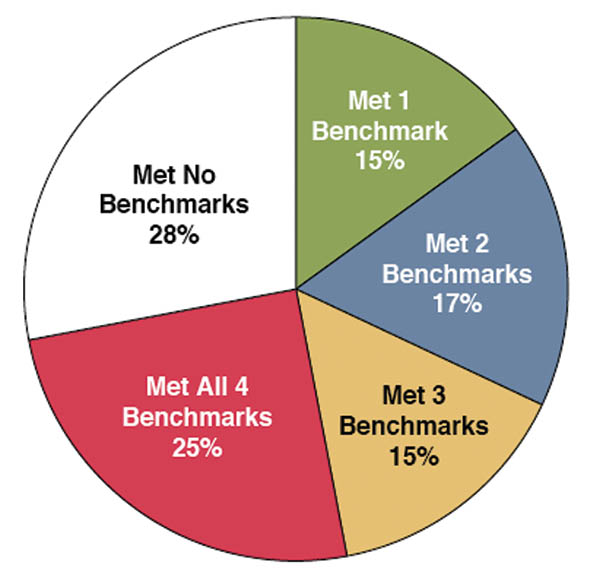
ACT describes its college readiness benchmarks as “the minimum scores needed on the ACT subject
area tests to indicate a 50% chance of obtaining a B or higher or about a 75% chance of obtaining a
C or higher in corresponding first-year credit-bearing college courses.” In a broader sense, they
are measurements of a student’s likely ability to succeed in college and career studies without
needing remedial courses.
Above is a pie chart showing how many ACT-tested high-school graduates managed to attain each of
the basic college readiness benchmarks in English (18), Reading (21), Mathematics (22), and Science
(24). Like all the other graphics in this article, it is taken from the ACT report
The Condition of College & Career Readiness 2011 and is used by permission.
As you can see, about 1 in 4 students who took the ACT appear truly ready for college work.
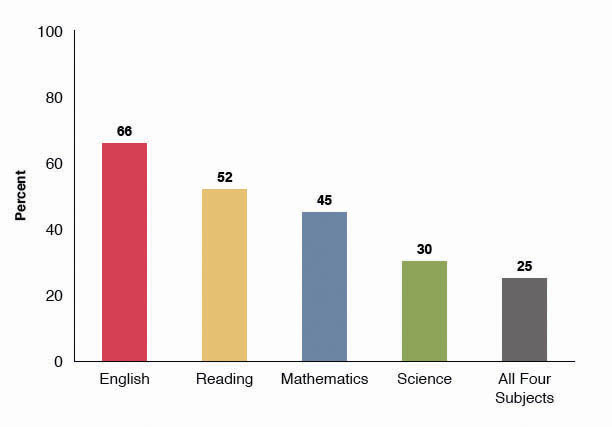
For a closer look at where today’s students are falling short, look at the breakdown above by
specific subject. Here we see that ⅔ of high school grads who took the ACT managed to meet the
English benchmark (causing me to wonder a bit about the English benchmark!), while only just over
half met the Reading benchmark. Forty-five percent met the Math benchmark, while a scant 30 percent
attained the Science benchmark.
Let’s stop and think for a minute. The results above are from the
better high-school students:
those who managed to graduate.
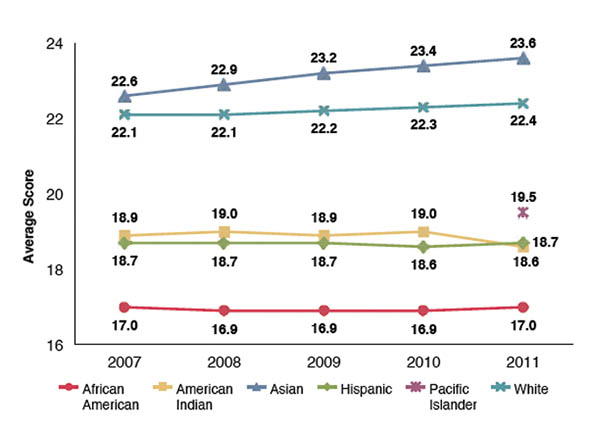
The graph above shows results by race and ethnicity from 2007 to 2011. As you can see, during this
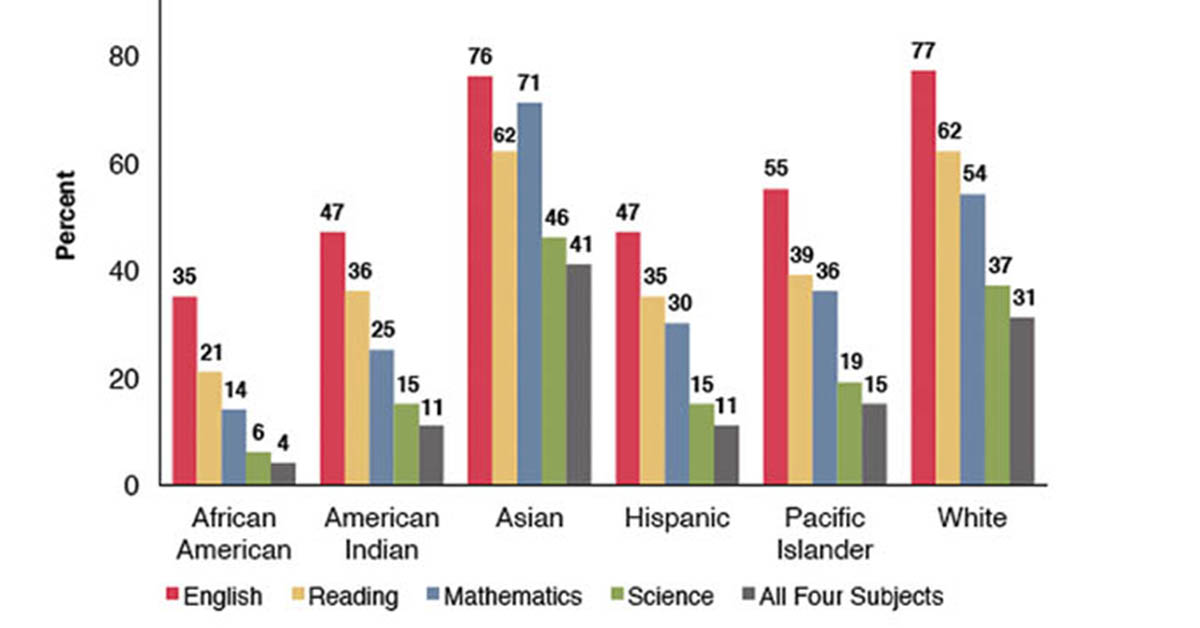
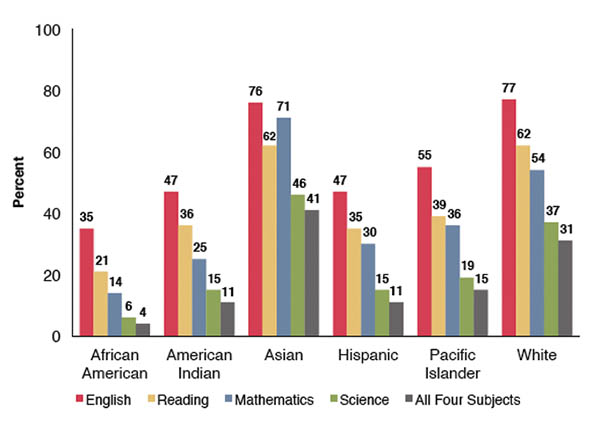
period the average homeschooler outperformed all groups except Asians. But as the graph at the top
of the next column shows, only 41 percent of Asians were able to meet all four benchmarks in 2011.
What this means is that the
vast majority of kids aren’t learning everything they need to learn in
high school.
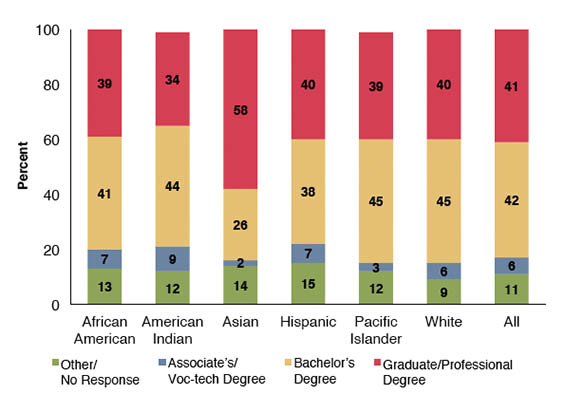
Now to the final graph. This shows that all ethnic and racial groups of high-school students
pretty much hope to attain the same level of higher education, with the exception that Asians are
more intent on graduate school.
Given all the bad news we’ve just seen, how can we help kids succeed?
Research has shown that educational outcomes for homeschoolers do not differ by race or ethnicity,
and homeschoolers surpass all groups but Asians.
So homeschooling your high-school students is a great first step.
Now, what’s the second step?
Practical Homeschooling is here to help you step up your game. There is so much we can do to
better prepare our students, as you’ll see in future issues.
Helping you graduate young adults who are fully prepared—for both college and life—is our mission.